Archive for July, 2026

Welcome to the August 2026 issue of my newsletter, “News from the Crypt,” and please visit Carter’s Crypt, devoted to my horror, fantasy, and paranormal romance work, especially focusing on vampires and shapeshifting beasties. If you have a particular fondness for vampires, check out the chronology of my series in the link labeled “Vanishing Breed Vampire Universe.”
Also, check out the multi-author Alien Romances Blog
To subscribe to this monthly newsletter, please e-mail me at MLCVamp@aol.com, and I will add you to the list.
For other web links of possible interest, please scroll to the end.
In the spirit of summer, below is an excerpt from “Spooky Tutti Frutti,” my novella in the “One Scoop or Two” ice-cream-themed series published by the Wild Rose Press. Celia, searching for a new flavor to promote her shop at the upcoming waterfront festival, meets a prospective temp worker who impresses her as a bit strange, along with a dog that seemingly appears out of nowhere.
Please enjoy this month’s interview with contemporary romance author Maria Imbalzano.
*****
Interview with Maria Imbalzano:
What inspired you to become a writer?
I love to read, but I never liked to write until I got to law school. Writing legal briefs and memoranda of law worked for me. But legal writing is very different than creative writing. One night, after working all day and getting the kids into bed, I was reading a Danielle Steele book and something was bothering me about it. I said to myself “I bet I could do this.” Why I ever thought I could write a book is beyond me, but I decided to try. A short fifteen years later, my first book was published (which was not the first manuscript I wrote – it was the fifth). In my case, persistence was key. My eleventh novel was just released on June 1st.
What genres do you work in?
I write contemporary romance, but several books in my Sworn Sisters Series would be considered women’s fiction with a strong romance.
Do you outline, “wing it,” or something in between?
I am a plotter to the nth degree. There is no winging it here. I blueprint my entire book, scene by scene, chapter by chapter, before I sit down at my computer to write the book.
What have been the major influences on your work (favorite authors or whatever)?
My favorite romance author back in the day was Judith McNaught. Her books made me fall in love with the romance genre. My favorite of hers is called “Perfect” and I often go back to it to try to learn from a master.
Did your experience in legal writing in any way prepare you for writing fiction? Any overlap in the required skills?
Legal writing is very linear and analytical. An issue is raised, you give your opinion on that issue, then you back it up with case law and arguments using that case law to bolster your position. This in no way prepared me to write fiction. I had to learn everything from scratch—writing dialog, exposition, point of view, characterization, conflicts. It was a whole new language and a very different way of writing. The only thing that helps me as a creative writer from my days as a lawyer is that I’ve always been a crazy mad editor. I don’t let anything go out until I’ve read it and fixed it at least ten times.
Please tell us about the Sworn Sisters series.
The Sworn Sisters Series is about four high school girlfriends, now in their early to mid-30’s. Each of them has their own book, (so they are all stand-alones) but the friends are in each other’s stories. Life events such as divorce, broken engagements, adoption, heartbreak, affairs, work-life balance, ambition, and betrayal all crop up in these emotional stories. A secret from the past affects their relationships with each other as well as with their love interests.
SWORN TO FORGET – Nicki’s story – career vs. relationship
SWORN TO REMEMBER- Sam’s story – reunion story, unrequited love
SWORN TO FLY – Alyssa’s story – fish-out-of-water, opposites attract
SWORN TO COLLIDE – Denise’s story – emotional betrayal and second chances
You contributed a novel, RETURN TO WYLDER, to the Wylder West multi-author series. What was it like to write in a shared-world series, and how did you ensure consistency with books by other authors?
I absolutely loved writing for a multi-author series. Reviewing the map of the town with its restaurants, bars, streets, and buildings and placing my characters there was so much fun. (I had also written a book for the Deerbourne Inn Series called “A Song for Another Day”). There were specific rules that our publisher established for the series, but nothing that was difficult to deal with. Most books in the Wylder series were historical—taking place in the late 1800s. But since I write contemporary romance, I asked if I could write a story that took place now, and my idea was approved. I believe I was the only author to write a contemporary in that series, so my story didn’t overlap or deal with any of the story lines in the other books. And best of all, that book won the Book Buyers Best Award and finaled in the NJ Romance Writers Golden Leaf Contest, the NEXT (National Excellence in Story Telling) contest, and the Carla Crown Jewel of Books contest.
What is your latest or next-forthcoming book?
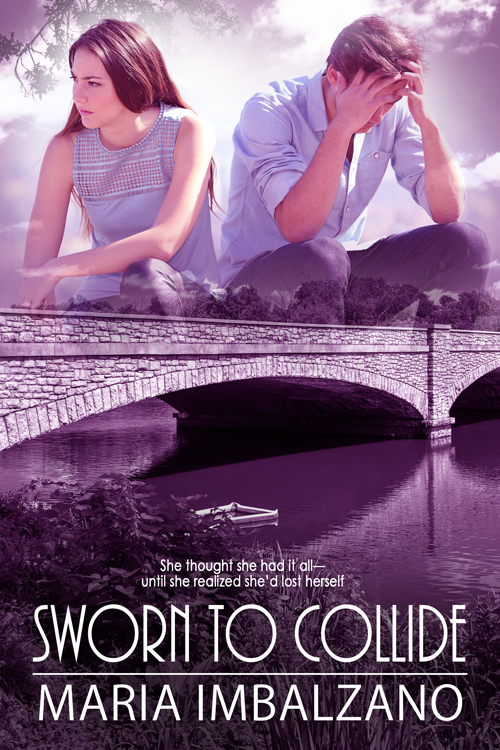
The book that was just released in June, 2026, is the fourth and final book of the Sworn Sisters Series called SWORN TO COLLIDE. This emotionally complex story is about a marriage in crisis, identity reclamation, ambition vs. family, betrayal and second chances. My experience as a divorce attorney certainly helped me with this one, since I have spent decades sitting across the table from couples navigating the same issues that Denise and Ben face in this novel.
Here is the blurb:
After devoting eleven years of marriage to Ben, her high school sweetheart, and stepping off the corporate ladder to raise their three children, Denise is ready to seize the reins of the career she always dreamed of. But as soon as she commits to step back into the professional world, Ben drops a bombshell that disrupts everything.
Suddenly, this once rock-solid couple finds themselves in a battle over ambition, identity, and whose turn it is to shine. As personal choices draw them further and further apart, they must confront their widening rift—a threat to the love they thought was unshakeable.
Can they rediscover the passion they once shared, or will their divergent paths pull them apart for good?
What are you working on now?
Currently, I’m working on the second book of the Sunrise Island Series. The stories take place at an environmental school in the Florida Keys—at a junior year away program for high school students. The main characters in these books are the teachers who work at Sunrise Island School and the people they meet. The first book in the series, ISLAND DETOUR, is an enemies to lovers, fish-out-of-water story. The book that I’m working on now is about two artists who are each escaping a painful incident in their not-too-distant pasts. Their instant attraction to each other and their love of creating art bond them, but their temporary break from their real lives does not bode well for a future together.
What advice would you give to aspiring authors?
Keep writing, even in the face of rejection. It took me 15 years to get my first contract, and that was for the fifth manuscript I wrote. During that time I went to seminars and writing conferences, read how-to books, and spoke to dozens of published authors, editors and agents. You can never learn enough about this craft, so my other piece of advice is to keep educating yourself. It’s the only way to get better—and that’s the goal.
What is the URL of your website? What about other internet presence?
Website
Maria Imbalzano
Instagram
Mariaimbalzano_author
*****
Some Books I’ve Read Lately:
THE THREE COFFIN PROBLEM, by Lavie Tidhar. A connected series of stories about Judge Dee, a vampire magistrate traveling through medieval Europe, and ultimately to London, with his hapless human assistant, Jonathan. Most were originally published on the Reactor site (formerly Tor.com), while two pieces are original to this collection. I’d previously read some of the online selections but not all, so the majority of the contents were new to me. A brief flashback reveals that Dee saved Jonathan’s life in the aftermath of a battle, but it remains unclear (even to Jonathan himself) why Jonathan sticks with him, much less why the ancient vampire keeps him around. As provider of human perspective on the secret world of the undead, Jonathan comes across as a particularly clueless Sancho-Panza-like figure. When not cowering in fear from other vampires – entirely justified, given that they label him “food,” and only Dee’s protection keeps him alive – he’s more often than not cold, wet, exhausted, and hungry. Judge Dee tends to forget about human weaknesses in his own preoccupation with answering the latest summons to enforce justice, so Jonathan spends a lot of time wondering when his next meal will arrive. Vampire law mandates not drawing mortal attention to the existence of the undead and, above all, not killing other vampires without a demonstrably good reason. Like an extremely dim Watson, who nonetheless sometimes manages to come up with helpful observations, Jonathan tags along while Dee solves crimes and deals with malefactors. It’s fun to watch Dee unravel mysteries and intimidate other vampires. Although a cool observer of events with the incisive intellect of an undead Sherlock Holmes, he does have some vulnerabilities. We discover he was once in love in the remote past, still bearing scars from that traumatic event. Moreover, he actually displays apprehension upon meeting one class of vampires – librarians. Despite Jonathan’s revolting table manners and incurious attitude toward anything outside his immediate needs, one can’t help sympathizing with his plight. I enjoyed seeing him involved in a romantic relationship with the human female servant of another vampire. While the tales proceed in internal chronological order, each can be read independently with no great loss. The collection is open-ended, with plenty of room for future installments.
EVERYBODY’S PERFECT, by Jo Walton. The title of this fantasy novel set in an alternate-world counterpart of Venice seems ironic, for everybody we meet has common human flaws and weaknesses. The significance of the title becomes apparent only in the final chapter. The Serenissima, as the cover blurb puts it, is a shadow city “built from mist and belief.” Its inhabitants, of a variety of humanoid species, come from multiple worlds. They refer to all Earth-human people as Venetians, since only Venice harbors a portal from Earth into the Serenissima. Each chapter is narrated in the first person by a different character, the in-universe reason for this structure being revealed at the end of the book. Through their distinctive voices, we learn about their species and the others they interact with, as well as the society and culture of the Serenissima. In this city, belief literally shapes reality. Objects, and perhaps even people, sometimes fade into nothing unless diligently observed. If you leave your boat tied to a dock, for instance, you’d better pay someone to watch it so it can’t vanish before you return. Conversely, if you need something urgently enough, a strong enough belief in its existence can sometimes cause it to materialize. Not that this ubiquitous magic makes life easy, though. Every character has problems to struggle with. The overarching plot is quite simple. A certain otherwise obscure person’s dream foretells two impending major changes: The city will acquire a doge to lead its council, like the mundane Venice, and a cure for a lethal sexually transmitted disease known as “blight” will be found. Meanwhile, circles of sufferers from blight gather under the care of gifted people who temporarily guide them into higher planes of existence, retarding the progress of the disease. The true interest of the novel (for me, anyway) lies in the individual crises faced by the various characters. Therefore, I found the multi-narrator structure frustrating. Just as I got deeply absorbed in one person’s story, the chapter would end, and I’d get thrown into yet another new character’s viewpoint. Granted, the concluding section gives us brief denouements for most of them, but that gesture toward closure didn’t completely satisfy me. Only a gifted author such as Walton could pull off that plot structure while keeping the reader’s attention riveted throughout.
THE CHILDREN, by Melissa Albert. Fans of the Hazel Wood books might wonder, as I did for most of this novel, where the fantasy element is. Don’t worry; there is one, but we have to wait quite a while for it. Guinevere and Ennis Sharpe grew up in the shadow of their mother Edith’s bestselling portal fantasy series for children. The protagonists share the names of Edith’s offspring. As a result, readers tend to conflate the real children, even as adults, with the fictional adventurers in the magical realm of the Ninth City. Moreover, the series was left tantalizingly unfinished, with the final expected book remaining unwritten. In the opening scene of THE CHILDREN (after a prologue in the form of a brief excerpt from one of Edith’s books), Guin prepares for a TV interview publicizing her memoir of her childhood and parents. Its ghost-written status incites disdain from some quarters. However, she meets many fans eager to confide how much the Ninth City series meant to them as children, conversations for which Guin has a prepared script. She offers sanitized replies to questions such as, “What was it like to grow up in the legendary Farmhouse?” Meanwhile, her estranged brother, a renowned artist who has consistently rejected all public questions about his family background, prepares to unveil an immersive installation titled “Mother.” Over the course of the novel, flashbacks reveal the truth of Guin and Ennis’s far from idyllic past. Edith married their much older father in her teens. As a result, her parents rejected the errant couple. Guin and Ennis’s early childhood consisted of a nomadic lifestyle, moving from one large city to another. When they finally settle in a remote Vermont farmhouse grudgingly donated by their grandfather, the rustic, rambling structure amid acres of forest and crammed with fascinatingly quirky things to discover does at first seem idyllic, if reclusive. Fragmentary flashback revelations, though, disclose conditions better described as eccentric and chaotic. Their parents’ marriage turns dysfunctional, including serial adultery on the part of their father. With Edith’s increasing fame, the celebrated Farmhouse develops into a sort of combined artist’s retreat and commune. We don’t learn until nearly the end how Edith lost a finger and what really happened on the night a catastrophic fire orphaned and separated the children. The narrative unfolds in three timelines – the present, in the weeks before Ennis’s mysterious “Mother” exhibit opens; the distant past of the children’s formative years at the Farmhouse; and Guin’s life between those two periods. Upon the opening of “Mother,” Ennis at last reveals to Guin the truth he’s known for many years – the supernatural origin of Edith’s stories, his own artistic gift, and Guin’s suppressed talent. The novel doesn’t have exactly a happy ending, but a satisfactory one, in which the former children take control of their own destinies at last.
GIRL OF LORE, by Melanie Dale. Perfect for fans of BUFFY THE VAMPIRE SLAYER, which the author name-checks in her acknowledgments. The small town of London, Georgia, may not sit on a Hellmouth, but it swarms with rumors and urban legends about weird, maybe supernatural occurrences. Unexplained sinkholes constitute only the most mundane of the phenomena. Although high-school sophomore Mina doesn’t believe the tales, she becomes intrigued with the idea of starting a Lore Club to study local history and, well, lore. Maybe getting involved in school activities in addition to serving as her class’s student council representative will reassure her single mother that Mina is becoming better adjusted. The older of two adoptive daughters, Mina has only one real friend. At home, her relationship with her sister displays constant friction and occasional open hostility. Like the author herself, Mina copes with obsessive-compulsive disorder. The book debunks common misconceptions about OCD, especially that it manifests as compulsive neatness. The worst part, for Mina, consists of obsessive thoughts about harming herself or others. Her therapist reassures her that her horror of such thoughts proves she’s not at risk of acting on them. The therapist assigns her homework of writing one of the obtrusive fantasies in detail. When her little sister reads and gossips about that private document, Mina’s reputation at school worsens. Fortunately, her Lore Club companions, developing into friends, offer support. At first, I wasn’t sure how to feel about so many characters bearing names derived from DRACULA. Once I accepted the implicit premise that this story takes place in an alternate universe where Stoker’s novel doesn’t exist, though, I had fun spotting the allusions – not only Mina Murray but Jackie Seward, her best friend (female); new student Quincey Morris from Texas; Jonathan Harker, source of belligerent sexual tension; Buddy Swales, obviously destined to be a victim; an abandoned, dilapidated mansion called Carfax House, whose owners vanished over a decade earlier; and many more, plus a few inspired by other classic horror literature. For example, Mina interviews an elderly resident named Grace Poole about the mysteries in the town’s past. Soon afterward, the old lady dies suddenly. After that incident, an encounter with an enigmatic woman in the public library, and the discovery of a very strange book, Mina begins to contemplate the possible reality of the supernatural. Yes, London does harbor vampires. Jonathan’s family hides a secret heritage. Mina’s version of the Scooby Gang unites to combat the monsters, not only the undead but an Old One lurking beneath the town, awaiting its chance to rise. The conclusion begs for a sequel, with an obvious hook in the fact that the Lore Club has only begun to explore the revelations in the occult tome Mina discovered. I hope the author plans a series. Mina comes across as a vividly three-dimensional character with whom it’s easy to sympathize.
For my recommendations of “must read” classic and modern vampire fiction, explore the Realm of the Vampires:
Realm of the Vampires
*****
Excerpt from “Spooky Tutti Frutti”:
Inside, the chill of the air conditioner sent a delightful shiver over Celia’s bare arms. She surveyed the interior with satisfaction despite her worries. She’d lavished money on redecorating in a vintage 1950s style dominated by chrome and fire-engine red. Linoleum in a black-and-white checkerboard pattern covered the floor. Six high stools at the counter and four small, round tables provided seating for customers who didn’t want their cones or cups to go. She sold bottled soft drinks from a refrigerated case next to the cash register. Posters of singers and movie stars from the period adorned the walls. To coordinate with the décor, Celia wore bright red slacks and a red-and-white blouse on the job. Fortunately, the color scheme vividly set off her dark hair and olive complexion. Tying on her apron, she waved up at the iconic photo of a blonde star’s skirt billowing in the draft from a sidewalk grate. “Time to get back to work.”
She laughed at herself as she headed for the kitchen. *Maybe Blair has a point that I’m working too hard. I’m talking to movie posters.* Humming a rock ballad stuck in her head from the fifties playlist she ran on a continuous loop all day, she loaded and switched on the dishwasher. After cleaning the ice-cream makers and doing other routine chores in the kitchen, she began scrubbing the counter and tables in the front room.
She started at a rapid clicking behind her. Turning toward the entrance, she came face-to-face with the source of the noise. A huge, black, hairy dog — a Newfoundland. He panted and wagged his tail at the sight of her.
“What the heck are you doing in here?” She glanced at the door — securely shut, of course.
The dog sat in the middle of the floor and stared up at her with a goofy, tongue-lolling expression. When she offered her hand, he sniffed it. “Wherever you came from, you can’t stay.”
As she leaned over to look at his collar, a feminine voice said, “Oh, neat, you found Nigel.”
Once more Celia flinched in surprise. She whirled around to discover a girl who looked no more than twenty, at least fifteen years younger than Celia herself, leaning against the counter.
*Where did she come from?* Again Celia checked the door, which was still definitely closed and locked. “How did you get in?”
“I saw your sign about needing help.” Which wasn’t an answer. The intruder, petite and lightly freckled, had flame-red hair in a pixie cut with fringed bangs. Dressed in white capri pants, a loose, white, V-necked blouse trimmed in red and blue, and canvas deck shoes, she looked as if she’d just come from a boating excursion.
“Is this your dog?” Celia frowned down at the girl, whose delicate frame made her feel even taller than she normally did. “He can’t stay in here. It’s against health regulations.”
“Oh, sorry.” The girl opened the front door and shooed the dog outside. “Go on, Nigel.” A second later, the door closed again, and the dog was gone.
*I didn’t see her turn the deadbolt or the knob either time. I must be falling asleep on my feet.* “Wait, will he be okay? You can’t just let him wander the streets.”
“It’s cool. My boyfriend will take care of him.”
Celia marched to the entrance and peeked through the glass. She didn’t see any sign of the animal by the glow of the nearby street lamp. The alleged boyfriend must have whisked him away instantly.
She turned back to the visitor. “You’re interested in the temporary job? I’d rather you’d have come during regular hours, but since you’re already here…” She gestured for the girl to take a seat at the nearest table. “I’m Celia Rossi, the owner.”
“I’m Suzie Conroy. Making ice cream is my hobby, so I’d love to work however long you need me.” She scanned the room. “It’s so different from before.” She spoke softly, as if to herself.
“Oh, you used to come here when the previous owner had the place?”
“Longer ago than that.”
-end of excerpt-
*****
The long-time distributor of THE VAMPIRE’S CRYPT has closed its website. If you would like to read any issue of this fanzine, which contains fiction, interviews, and a detailed book review column, visit the Dropbox page below. Find information about the contents of each issue on this page of my website:
All issues are now posted on Dropbox, where you should be able to download them at this link:
All Vampire’s Crypt Issues on Dropbox
A complete list of my available works, arranged roughly by genre, with purchase links:
For anyone who would like to read previous issues of this newsletter, they’re posted on my website here (starting from January 2018):
This is my Facebook author page. Please visit!
Facebook
Here’s my page in Barnes and Noble’s Nook store:
Barnes and Noble
Here’s the list of my Kindle books on Amazon. (The final page, however, includes some Ellora’s Cave anthologies in which I don’t have stories):
Carter Kindle Books
Here’s a shortcut URL to my author page on Amazon:
Amazon
The Fiction Database displays a comprehensive list of my books (although with a handful of fairy tales by a different Margaret Carter near the end):
My Goodreads page:
Goodreads
Please “Like” my author Facebook page (cited above) to see reminders when each monthly newsletter is uploaded. I’ve also noticed that I’m more likely to be shown posts from liked or friended sources in my Facebook feed when I’ve “Liked” some of their individual posts, so you might want to do that, too. Thanks!
My Publishers:
Writers Exchange E-Publishing: Writers Exchange
Harlequin: Harlequin
Wild Rose Press: Wild Rose Press
You can contact me at: MLCVamp@aol.com
“Beast” wishes until next time—
Margaret L. Carter
Welcome to the July 2026 issue of my newsletter, “News from the Crypt,” and please visit Carter’s Crypt, devoted to my horror, fantasy, and paranormal romance work, especially focusing on vampires and shapeshifting beasties. If you have a particular fondness for vampires, check out the chronology of my series in the link labeled “Vanishing Breed Vampire Universe.”
Also, check out the multi-author Alien Romances Blog
To subscribe to this monthly newsletter, please e-mail me at MLCVamp@aol.com, and I will add you to the list.
For other web links of possible interest, please scroll to the end.
A milestone month — 250 newsletters!
In June, N. N. Light’s Book Heaven featured my duology of humorous, steamy Lovecraftian tales, TENTACLES AND WEDDING BELLS, in their Celebrate Weddings promotional event:
N. N. Light’s Celebrate Weddings
Below is an excerpt from the second, shorter story, “Weird Wedding Guest.” At Lauren’s wedding, bridesmaid Roxanne can’t wait to meet her mysterious e-mail pal, Wilbur, the groom’s reclusive brother. But he’s not at all what she expected, almost literally out of this world.
This month we present an interview with fantasy and romance author Chelsey M. Ortega.
*****
Interview with Chelsey M. Ortega:
What inspired you to become a writer?
I have always wanted to be a writer since 3rd grade. But what made me seriously try was during Covid. My husband lost his job, and I wrote late at night after everyone else was in bed to decompress from our new situation. I finished the first draft in 3 months. It was the first time I’d written a full book, and felt that was a sign to get it published.
What genres do you work in?
Fantasy and romance. I specifically write dark fantasy and paranormal romance. The fantasy elements take center stage, but I always have a strong romantic subplot.
Do you outline, “wing it,” or something in between?
Something in between. I like to call myself a plantser. I do start with an outline, and I use my outline to help me begin writing. But once I dive into the story, the characters come to life, and they often make decisions beyond the outline. I update the outline as my story changes. Often, returning to my outline has helped me when I hit writer’s block.
What have been the major influences on your work (favorite authors or whatever)?
Harry Potter, Twilight, Witches of East End, Beautiful Creatures, Buffy the Vampire Slayer, and The Vampire Diaries have all heavily inspired my world building and storytelling. Anything that features witches and/or vampires, I’m going to read and analyze (and also be entertained by).
How has teaching high-school history affected your writing career?
I would argue that many fantasy stories at least highlight, if not have the main plot be, a commentary on past or current human events. And the wars and issues of mankind serve as great influence for the magical politics in a fantasy setting. Various human governments and cultures have heavily influenced the world building for my magical communities. I’ve also been told that my teenage characters are relatable and realistic, so it would appear that spending 6 hours a day with teenagers has helped bring my characters to life.
What would you consider the main differences between adult and YA fiction (aside from the ages of the protagonists)?
Adult fiction can dive deeper into more mature topics. Authors can be more explicit in language, violence, and intimacy. But I do think that what I like to call Upper YA can serve as a bridge between YA and adult. Authors who write characters 16-years-old and older can dip their toes in these more mature themes. I personally think that YA is too broad. 12-year-olds aren’t reading the same type of stories as 17-year-olds. I would love to see YA split into younger (12-15) and older (16-18).
What will readers find on your blog?
Book reviews, guest authors sharing their books, the occasional writing craft post, and historical sites/museums I have visited.
What is your latest or next-forthcoming book?
My most recent release was Bondwitch: Hybrid, which came out on May 11th of this year. And my next book will most likely be The Wolf Whisperer and the Warrior, which is a stand alone in a completely different world from the Bondwitch series.
What are you working on now? Do you plan on more “Bondwitch” novels?
I am working on getting my Master’s in TESOL at the moment. So, my homework takes up most of my writing time. When I do have time to write, I try to complete a page or two of my first draft of Bondwitch: Liberation. So, yes, there will be more Bondwitch novels! There will eventually be 4 novels in the Bondwitch series.
What advice would you give to aspiring authors?
Write what you want to read. I know that’s a cliché statement, but it has been vital to my success. Writing isn’t fun if you don’t like the story or characters. If you’re chasing what the current trend is, it won’t be a trend anymore by the time you’re ready to publish (especially if you’re as slow at writing and editing as I am). Writing shouldn’t be a chore or a job. It should be your escape, safe space, relaxing “me time”. So, write what you like. Write what you know. Write about your passions.
What is the URL of your website? What about other internet presence?
I am most active on my website Chelsey M. Ortega, Facebook, Instagram, and TikTok.
Thanks for interviewing me!
Chelsey
*****
Some Books I’ve Read Lately:
TAKE ME TO YOUR LEADER, by Neil DeGrasse Tyson. This book by the famed astrophysicist is subtitled “Perspectives on Your First Alien Encounter.” He begins the prologue with, “Ever since childhood I’ve wanted to be abducted by Aliens.” The entire book continues in this engaging, conversational style, yet packed with solid facts and well-grounded speculation. From the viewpoint of a properly skeptical scientist who hopes extraterrestrials exist, he explores topics such as the frequency of Earth-like planets in the universe, environments on other worlds, conditions required for life as we know it, and the likelihood that extraterrestrials have visited us. He analyzes the familiar question, “Where is everybody?” If intelligent life exists outside our solar system, why haven’t we met those entities or at least seen evidence of them? Tyson reviews the usual answers, the most likely being that no hyperdrives or navigable wormholes exist to circumvent the light speed limit; we’re separated from our interstellar neighbors, if any, by insurmountable distances. But suppose they do exist and manage to visit us? In the chapters “Alien to Us” and “Alien to Them,” Tyson explores the biological possibilities for life like and unlike terrestrial organisms. “Alien Intelligence,” “Alien Science & Technology,” and “Alien Powers” speculate on those topics and how they might affect aliens’ possible superiority to us and how they would interact with us. “Alien Evidence” and “Alien to Me” discuss UFO believers and the alleged evidence for extraterrestrial visitors. The brief epilogue wonders what the aliens might think of us if they met us. I was glad to find that the book features extensive endnotes and index. This wide-ranging, detailed, highly readable work is recommended for fans of science fiction and popular science.
CALL THE MIDWIFE (aka THE MIDWIFE), SHADOWS OF THE WORKHOUSE, and FAREWELL TO THE EAST END, by Jennifer Worth. I bought these three volumes in the trade paperback editions with TV-tie-in covers. As most viewers of the absorbing, long-running series CALL THE MIDWIFE probably know, the program is based on Worth’s memoirs. Her work resembles James Herriot’s ALL CREATURES GREAT AND SMALL and its sequels in that the narrated incidents really happened, but names and minor identifying details are fictionalized. In addition to Worth’s reminiscences about her personal experiences as a midwife and visiting nurse at Nonnatus House, the books provide rich background information about London’s East End, the dockside workers, and the culture of the Poplar district. The second volume delves deeply into the history of the workhouse system, which lasted further into the twentieth century than I’d ever suspected. Heartrending narratives in SHADOWS OF THE WORKHOUSE focus mainly on the lives of several survivors of that system whom Worth knew in their later years. By the close of FAREWELL TO THE EAST END, slum clearance programs of the 1960s broke up the generation-spanning communities of the Poplar residents. The conclusion of that book culminates in the profound effects of National Health on medical services in the area, resulting in the closure of Nonnatus House, as depicted in the just-completed season of the TV series. Fans of the series will find the trilogy fascinating but mustn’t expect to see much of the filmed drama reflected in the books. Only the early seasons of the show are based on events in the memoirs. After Jenny’s departure, the program expands and extends the story, adding many invented characters, developing the existing ones in new directions, and relating the lives of the nuns, nurses, and patients to actual events of the 1950s and 60s. In addition to the historical background provided in the books, each one includes a helpful glossary of medical terms used in the text of that volume.
THE REFORMATORY, by Tananarive Due. As with THE BUFFALO HUNTER HUNTER, I put off reading this highly acclaimed horror novel because its length and disturbing content seemed so daunting. Like THE BUFFALO HUNTER HUNTER, however, Due’s historical novel turned out to be well worth the effort. And at least it’s not complicated by a nonlinear time structure like the other book. Set in a small Florida town in 1950, Due’s story portrays the culture of the Jim Crow South in harrowing detail. Robbie Stephens, age twelve, lives alone with his older sister, Gloria, their widowed father having fled to Chicago to avoid prosecution for a crime he didn’t commit. They’re nominally under the care of an elderly neighbor, Miz Lottie, with Gloria running their parentless household to the best of her ability. Robbie has the gift of seeing haints (ghosts), although he yearns in vain for an encounter with the spirit of their late mother. When a teenager from a prominent white family tries to force unwanted attentions on Gloria, Robbie fights to defend her. He’s arrested for kicking the older boy, even though the “victim” admits he started it. The length of Robbie’s unjust sentence to the reformatory of the title doesn’t sound unbearable until it becomes clear that any alleged misconduct could result in extension of his imprisonment. In theory, the institution looks like a genuine “school.” The boys take classes. They perform hours of daily compulsory work, some jobs rougher than others. There’s a band, which Robbie joins, the only bright spot in his incarceration. In practice, he faces bullying from other boys as well as some of the staff. The institution is segregated, with a stark contrast between the amenities on the briefly glimpsed white side and the living conditions of Black inmates. The odious director – essentially, the warden – hides ugly, dark secrets. Many boys have died there over the years, so it’s no surprise that their ghosts haunt the buildings and grounds. The Author’s Note reveals that she named Robbie Stephens in tribute to her great-uncle Robert Stephens, who died as a boy in a similar reform school in the 1930s. The novel’s protagonist isn’t meant to be the same person, though, and the events are fictional. Gloria has to navigate restrictive, convoluted regulations just to see Robbie during the narrow window allotted for visitors. Meanwhile, she searches for a way to free him or at least mitigate his sentence. A civil rights lawyer who has relocated from the north tries to help. Unfortunately, since he’s not only a liberal Yankee but a Jew, local authorities offer as little cooperation as they can get away with. Robbie makes a couple of friends, Redbone and Blue. The latter has a sometimes malicious sense of humor as well as a shocking secret of his own. The warden, learning of Robbie’s ghost communication ability, pressures him into agreeing to trap the earthbound spirits, which the warden means to destroy. Although not at all a sympathetic character, he doesn’t commit evil for its own sake; he has comprehensible motives rooted in childhood trauma. Blue insists Robbie should help the ghosts move on to their afterlives instead. Torn between those conflicting demands, Robbie becomes trapped in increasingly risky situations. The true horror of the story doesn’t center on the ghosts, most of whom are fairly harmless. The horror arises from the injustice and brutality of the system in general and the reformatory in particular. When Gloria concludes she can’t get justice through official channels, she decides to take extralegal steps. Among other support, she gets vital help from Miz Lottie, who proves herself much more than the feeble old lady she seems. The attempt to liberate Robbie converges with the supernatural plot and the warden’s fate in a suspenseful, action-packed conclusion. Love, loss, courage, and sacrifice make the story poignant as well as horrifying.
For my recommendations of “must read” classic and modern vampire fiction, explore the Realm of the Vampires:
Realm of the Vampires
*****
Excerpt from “Weird Wedding Guest”:
Roxanne pushed her wire-rimmed glasses up on her nose and peered at the decorative platform she was hiding behind. It looked like a six-foot-high mound of iridescent bubbles. Rainbow colors shimmered over its surface, and violet sparks like miniature lightning bolts coruscated through it. Fascinated, she ran a hand over it. Its cool, smooth surface rippled under her palm.
She jerked her hand away. She must have imagined that movement. The thing felt alive. Impossible.
Like this display, the whole celebration had struck her as beautiful but strange. She’d never even heard of the Temple of Dagon before her friend Lauren had drafted her as a bridesmaid. In the ceremony the priest of Dagon, wearing a robe adorned with a three-lobed eye, and the minister from Lauren’s parents’ church, who’d co-officiated with him, had made an odd-looking pair. Too bad her new husband Blake’s twin brother couldn’t make it to the wedding. Wilbur was housebound because of some condition neither he nor Blake had explained. Roxanne had exchanged e-mails for months with Wilbur, who seemed like a fun guy as well as intelligent. Blake had “introduced” them online, although until recently she hadn’t known their exact relationship. Wilbur would have made a more pleasant companion than Chad, she was sure of that.
Speaking of the pest, he marched into the room at that moment, calling her name. Just because they’d been paired in the ceremony and she’d resigned herself to the ritual of one dance together, he seemed to think she owed him the rest of the evening. She’d spent it evading his attention. Not that he was bad-looking, with the wavy, chestnut hair, chocolate-brown eyes, and broad shoulders, but hunkiness wasn’t everything. She sighed and scrunched lower behind the sculpture.
“Roxanne?” Instead of giving up when he didn’t get an answer, he circled the room until he stood at the proper angle to catch sight of her. “There you are. I thought I saw you run in here.”
“Forgot my purse.” She straightened up with it clutched in one hand.
“Come on, how about joining me for a drink before we head home?”
“No thanks, I’m kind of tired.” As she’d informed him at least twice already.
He captured her free hand. When she snatched it away, his smile froze. “What’s with you? I thought some sparks flew when we danced.”
“Sorry, not happening.” She turned away from him.
He clutched her arm to spin her around. Startled, she let him. “Bet I can change your mind.” Cupping the back of her head, he lowered his lips to hers.
The second she tasted the beer on his breath, she snapped out of her shock and recoiled from the kiss. “Let go of me.”
His grip tightened. “Quit teasing.”
“Can’t you tell the difference between teasing and ‘no’?” She struggled but couldn’t tug her arm free.
Something long and sinuous lashed out, wrapped around Chad’s wrist, and squeezed. He yelped, and his fingers went slack.
What is that? Roxanne gaped at the thing that encircled Chad’s arm. A whip? No, it looked more like a tentacle.
Glancing over her shoulder, she realized the appendage was attached to the sculpture. Somebody had to be operating it by remote control, but who and why?
A voice boomed, “Unhand the lady.” It reverberated in the pit of her stomach like organ music.
So the display was wired for sound too? What was the point of that? Chad obviously didn’t pause to think about such questions. He inched away, his mouth hanging open. A purple bolt of electricity arced from the tentacle to his skin. He yelped and jerked his arm loose.
“Go!” the voice ordered. He turned and ran out.
Roxanne straightened her glasses and scanned the sculpture. Its surface undulated, and lights flickered under the gleaming surface. “Uh—thanks. Where are you hiding, anyway?”
No longer thunderous but a mellow bass, the voice said, “I am not hiding. I am right here. Are you uninjured?” Three stalks extruded from the display. Stalks with multilobed eyes.
She scrambled backwards and bumped into the corner of the bar. One foot slid from under her. Two tentacles stretched out, one encircling her waist and the other winding around her right forearm. Her vision grayed, and she stifled a screech—stifled it because whatever this thing was, she still didn’t want Chad hearing her and rushing to the rescue.
-end of excerpt-
*****
The long-time distributor of THE VAMPIRE’S CRYPT has closed its website. If you would like to read any issue of this fanzine, which contains fiction, interviews, and a detailed book review column, visit the Dropbox page below. Find information about the contents of each issue on this page of my website:
All issues are now posted on Dropbox, where you should be able to download them at this link:
All Vampire’s Crypt Issues on Dropbox
A complete list of my available works, arranged roughly by genre, with purchase links:
For anyone who would like to read previous issues of this newsletter, they’re posted on my website here (starting from January 2018):
This is my Facebook author page. Please visit!
Facebook
Here’s my page in Barnes and Noble’s Nook store:
Barnes and Noble
Here’s the list of my Kindle books on Amazon. (The final page, however, includes some Ellora’s Cave anthologies in which I don’t have stories):
Carter Kindle Books
Here’s a shortcut URL to my author page on Amazon:
Amazon
The Fiction Database displays a comprehensive list of my books (although with a handful of fairy tales by a different Margaret Carter near the end):
My Goodreads page:
Goodreads
Please “Like” my author Facebook page (cited above) to see reminders when each monthly newsletter is uploaded. I’ve also noticed that I’m more likely to be shown posts from liked or friended sources in my Facebook feed when I’ve “Liked” some of their individual posts, so you might want to do that, too. Thanks!
My Publishers:
Writers Exchange E-Publishing: Writers Exchange
Harlequin: Harlequin
Wild Rose Press: Wild Rose Press
You can contact me at: MLCVamp@aol.com
“Beast” wishes until next time—
Margaret L. Carter